Shell MegAwatt Charger
Support High-Power Charging with energy storage capabilities.
Energy for Green Transport: Shell embraces Megawatt Charging with sonnenPro FlexStack. High charging power. Renewable energy. Intelligent infrastructure for heavy-duty and maritime transport.
Charging Infrastructure for the Next Stage of Electromobility
At the Energy Transition Campus Amsterdam, Shell is demonstrating what high-performance charging infrastructure for the future transport sector could look like. A megawatt charging system has been installed there, designed for both electric trucks and buses as well as maritime applications. The system supports charging capacities in the megawatt range, thereby creating an important foundation for efficiently operating heavy vehicles and ships electrically.
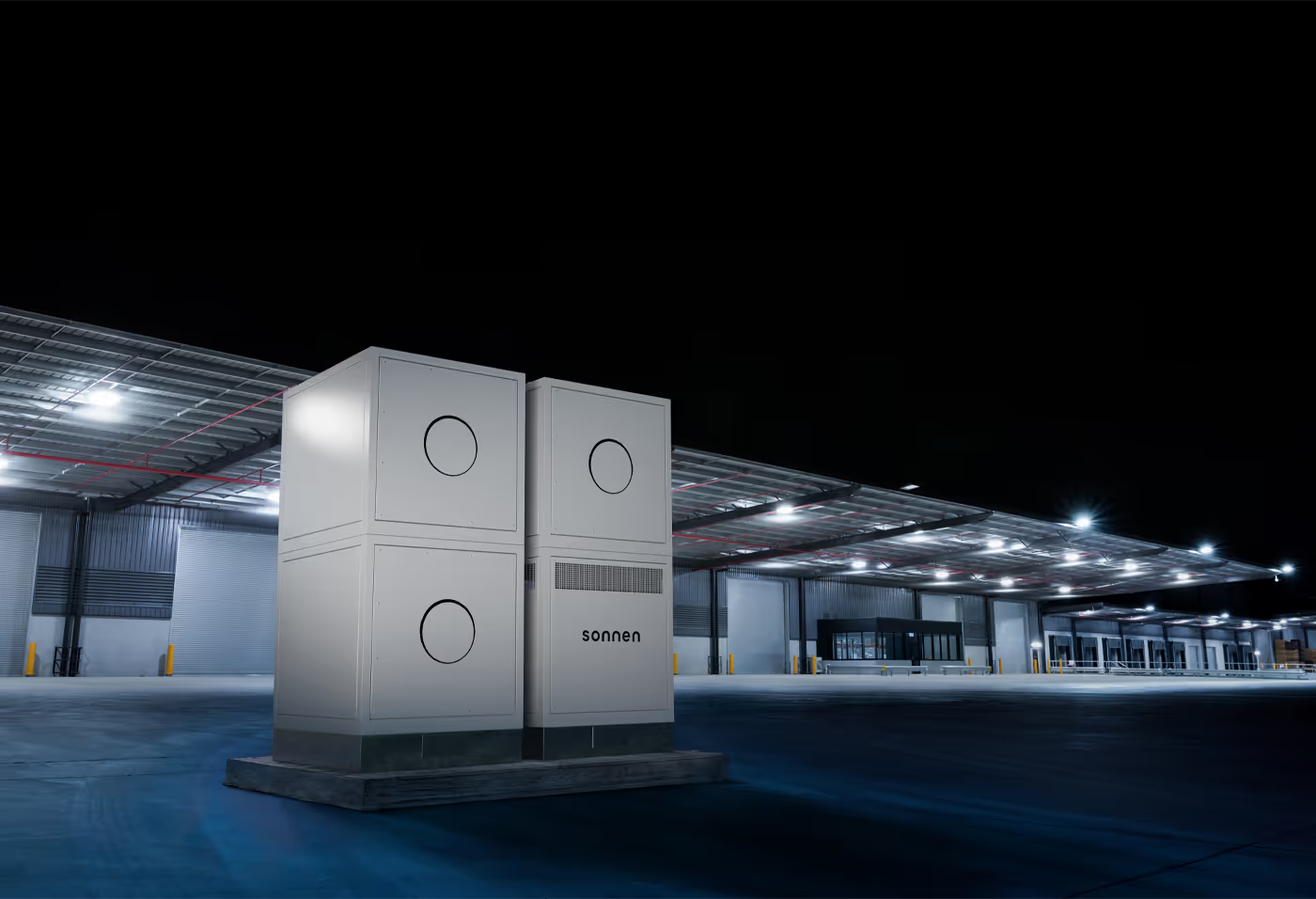
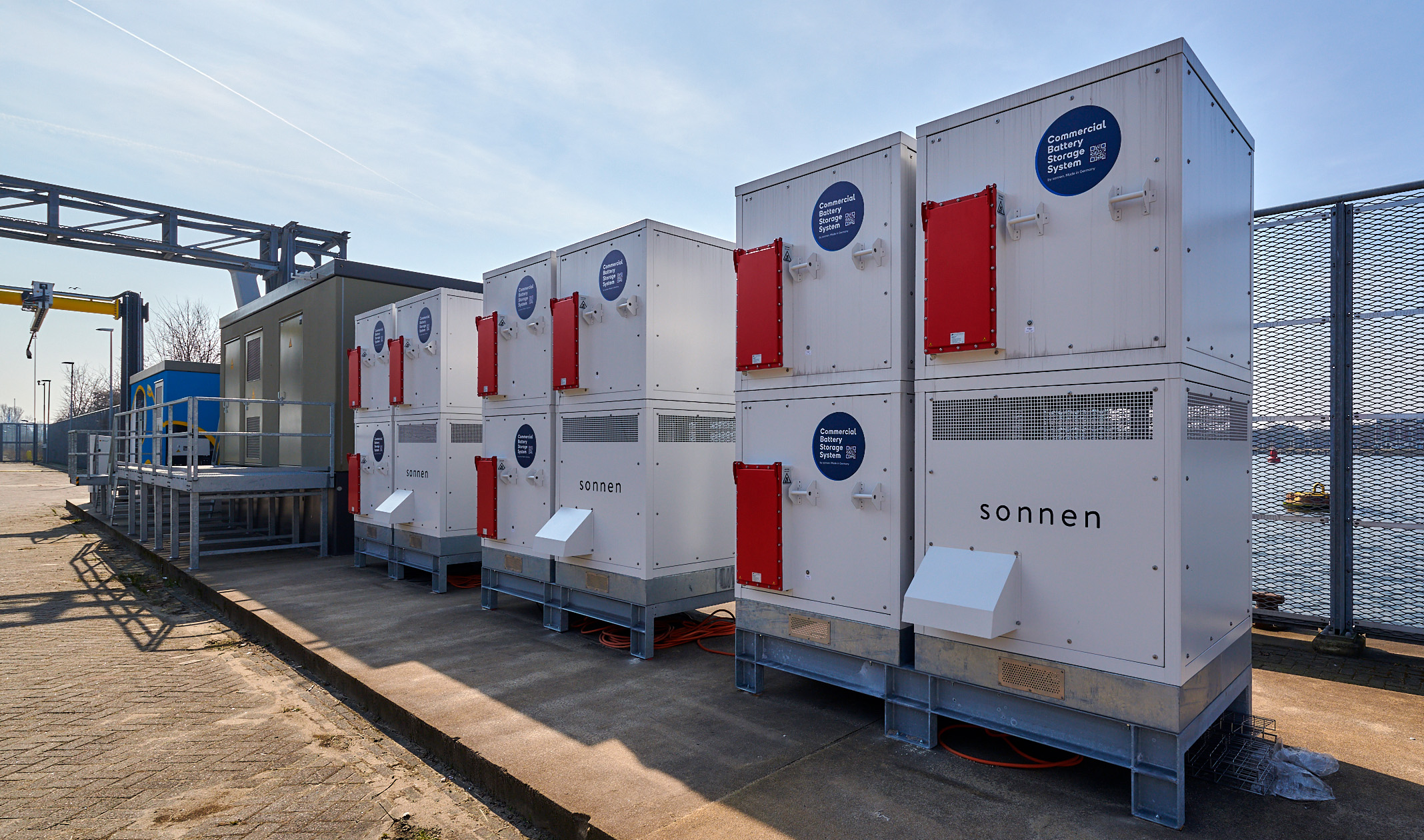
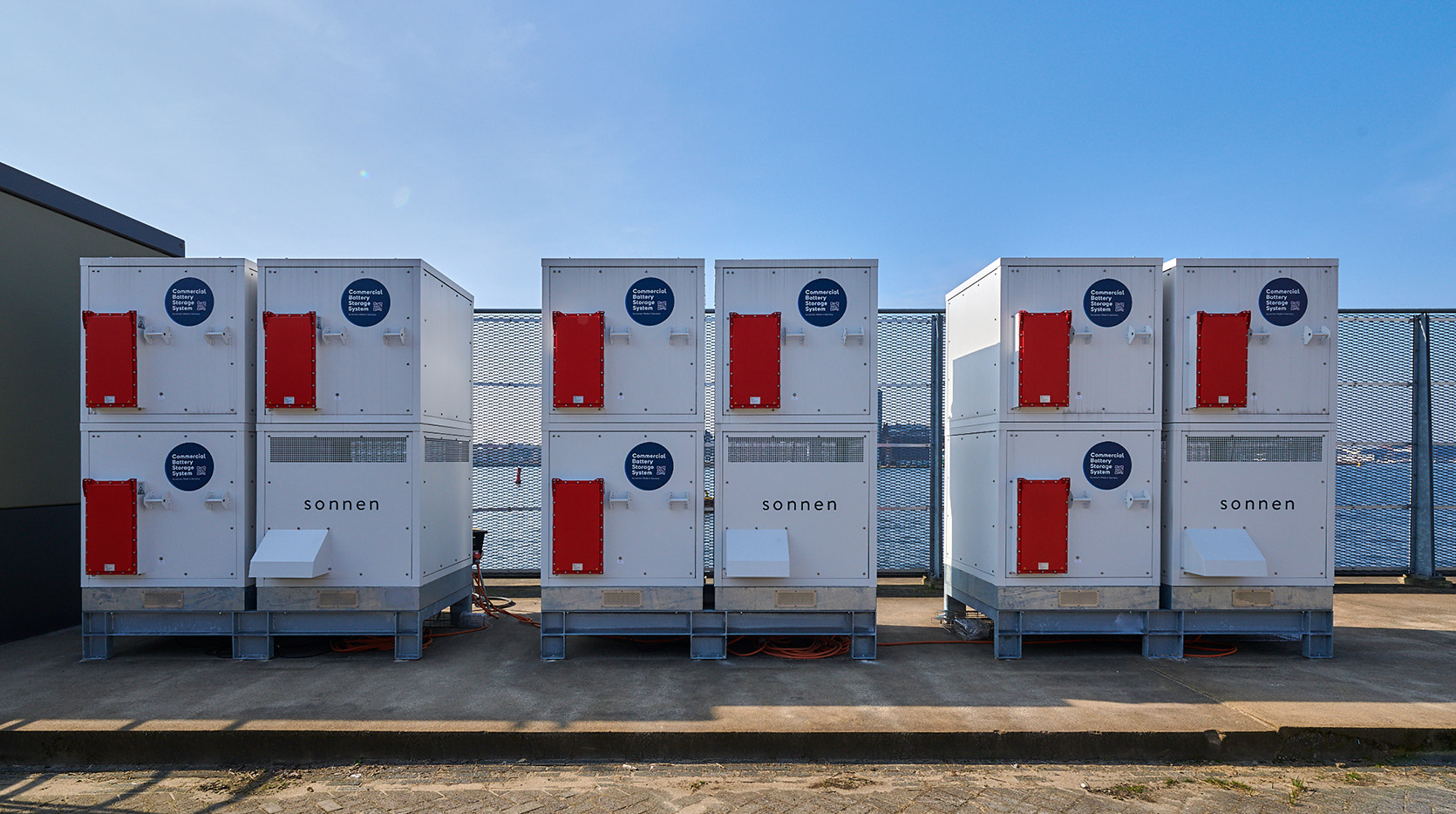
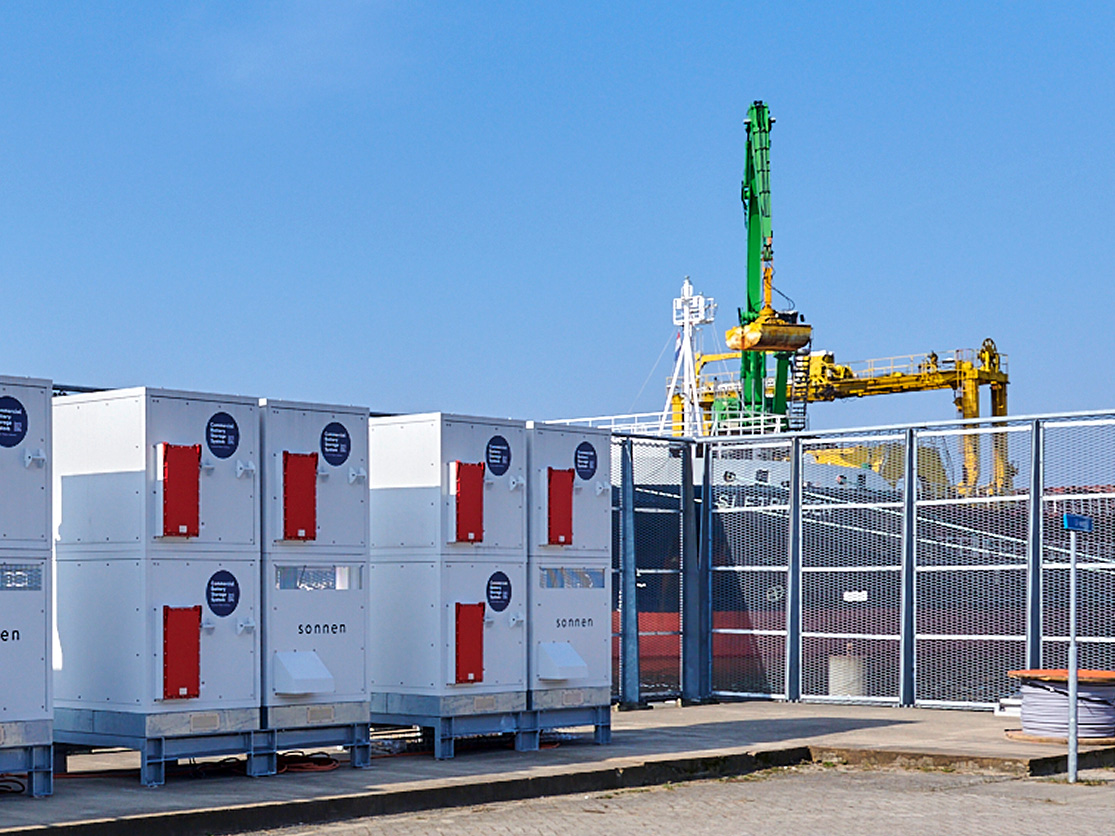
Three sonnenPro FlexStack systems play a central role: they support the 1 MW charging system as powerful buffer storage and ensure that renewable energy can be reliably made available for high charging capacities.
Microgrid instead of Grid Overload
The Megawatt Charger is part of an intelligent microgrid at the Energy Transition Campus Amsterdam. This connects approximately 3,600 solar modules, battery storage, numerous charging points, a hydrogen electrolyzer, and other energy sources into an integrated energy system.
The sonnenPro FlexStack stores surplus solar energy and makes it available precisely when high charging power is needed. This allows the system to draw large amounts of energy at short notice without unnecessarily burdening the public grid infrastructure. Especially for megawatt charging points, this buffer is crucial for making charging processes stable, predictable, and efficient.
Megawatt Charging for Trucks, Buses, and Ships
The technical basis is the Megawatt Charging Standard, or MCS. This standard defines uniform charging in the megawatt range, enabling cross-manufacturer compatibility for heavy-duty commercial vehicles, buses, and maritime applications. At the ETCA, the system is also designed for flexibility: it supports various connection types and can therefore serve different vehicle and battery types.
This makes the location a key demonstrator for the electrification of transport applications where traditional charging infrastructure quickly reaches its limits. Because the larger the battery, vehicle, and operating profile, the more crucial an energy infrastructure becomes that not only provides high power but also manages it intelligently.
Storage as a Key for Economical Charging Infrastructure
This approach is particularly relevant for transport companies, fleet operators, and logistics sites. Megawatt charging places high demands on grid connection and site infrastructure. Battery storage systems can decouple these load peaks from the public grid and buffer energy specifically.
This reduces the need for expensive grid connection capacity and makes charging infrastructure possible even at locations where a conventional grid expansion would only be feasible with high costs or long waiting times. At the same time, existing grid capacity can be utilized more effectively because energy is stored when available and retrieved when needed.

The Result
Shell demonstrates at the Energy Transition Campus Amsterdam how renewable energy, microgrid, megawatt charging, and sonnenPro FlexStack can work together. This creates a scalable charging infrastructure that enables high charging capacities for heavy-duty and maritime transport – thus making an important contribution to the electrification of the transport sector.
.avif)